Product & Formulation Development



Rising to Increasing Demand for Semi-Solid and Non-Sterile Liquid Drug Products
The expanding prevalence of chronic skin conditions, musculoskeletal pain, and other conditions is driving the demand for semi-solid drug products with dosing, drug delivery, and formulation flexibility. Likewise, non-sterile liquid drug products offer high dosing flexibility, can accommodate demanding formulation requirements, provide a quick onset of action, and are easy to use for diverse patient populations, including elderly and pediatric patients. CPL is dedicated to ongoing investments in expertise, capabilities, and capacity to meet the market’s needs for high-quality, often increasingly complex topical and liquid drug products.
Trusted Non-Sterile Liquid and Semi-Solid Product and Formulation Development

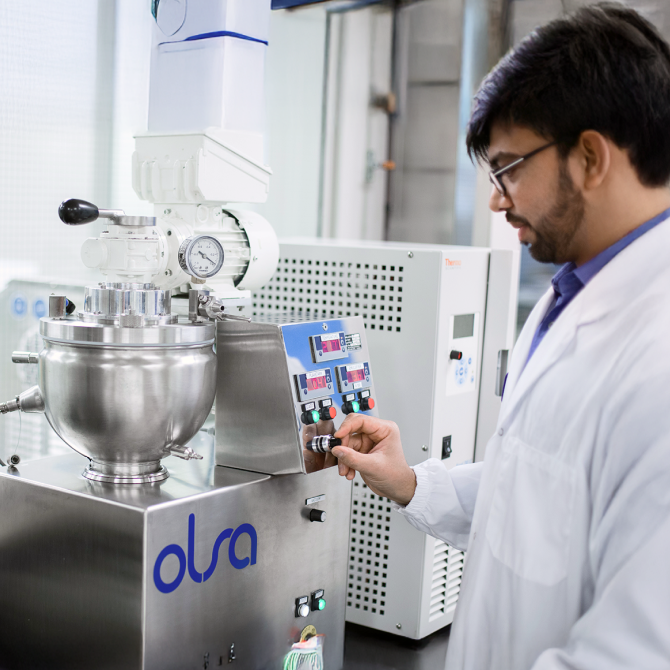
From API solubility and excipient compatibility studies through prototype batches, stability testing, Design of Experiments, scale‑up, and GMP manufacturing, CPL designs robust, manufacturable formulations for even the most challenging non‑sterile liquids and semi‑solids. Our integrated teams unite formulation, analytical, and manufacturing expertise to accelerate development, de-risk milestones, and deliver differentiated products that perform reliably in the lab, the plant, and the marketplace – on time, on budget, and with confidence.
Semi-Solid Drug Products
CPL excels at semi-solid formulation development, providing data-based recommendations on the final product format by formulating and selecting the optimal carrier to achieve the desired rheological, stability, skin permeation, and drug release profiles. We also carefully manage emulsion or suspension stability, preservative effectiveness, packaging–product interactions, and ensure successful scale-up to commercial volumes.
Non-Sterile Liquid Drug Products
Developing robust non-sterile liquid formulations demands careful balancing across multiple variables, including API solubility, stability, microbial control, palatability, and homogeneity. Whether a solution or suspension, APIs must be managed appropriately without compromising safety or shelf life, while preservatives are used effectively to prevent contamination without interacting with excipients or packaging. CPL’s formulation scientists design robust non-sterile liquid drug products that conform to the intended Quality Target Product Profile (QTPP) and maintain Critical Quality Attributes (CQAs) throughout the shelf-life of the product.
CPL Experience Spotlight: Suspension Formulation Rescue
Dedicated to Excellence
from Molecule to Commercialization
CPL supports programs from early-phase through commercial launch, combining preformulation insight, robust semi-solid and non-sterile liquid development, scalable process design, and clinical and commercial manufacturing.

Pharmaceutical Development Services
Pharmaceutical Development Services
Comprehensive expertise that turns molecules into scalable, compliant, market‑ready semi-solid and non-sterile therapies.

Analytical & Product Testing
Analytical & Product Testing
Robust analytics power confident development and manufacture of topical and non-sterile liquid products.

Clinical & Commercial Manufacturing
Clinical & Commercial Manufacturing
More than three decades of GMP manufacturing experience from clinical supply through commercialization.

Packaging, Labeling & Serialization
Packaging, Labeling & Serialization
Integrated packaging, serialization, and aggregation ensure compliant, continuous commercial supply.

Semi-Solid & Non-Sterile Liquid Expertise
Semi-Solid & Non-Sterile Liquid Expertise
Pure-play CDMO for semi-solids and non-sterile liquids, with advanced micro encapsulation capabilities.

Unique Product Handling Experience
Unique Product Handling Experience
Infrastructure and expertise to manage complex, higher-risk semi-solid and non-sterile liquid products.


FAQs
-
Product and formulation development for semi-solid and non-sterile liquid dosage forms focuses on designing safe, effective, and manufacturable topical, nasal, and oral liquid products. At CPL, our scientists select appropriate excipients and preservative systems based on pre-formulation studies and fine-tune attributes such as viscosity, particle size, and pH to meet target product profiles and regulatory expectations. For topical products, this includes ensuring consistent drug release and skin or mucosal penetration; for oral suspensions, product and formulation development also require dose uniformity, redispersibility, and palatability, all supported by phase-appropriate analytical method validation and stability studies.
-
Semi-solid formulation development for ointments, creams, gels, and lotions is technically demanding. Developers must balance emulsion or suspension stability, rheology, spreadability, and drug release, while controlling API solubility and degradation pathways. Phase separation, Ostwald ripening, crystal growth, and preservative effectiveness are common risks that can compromise product performance or shelf life. In addition, topical drug products for generic development, scale-up, or tech transfer must meet stringent regulatory requirements for bioequivalence, based on SUPAC-SS guidelines and in vitro release testing (IVRT) under USP <1724>, while remaining scalable from lab batches to commercial manufacturing.
-
In vitro permeation testing (IVPT) and in vitro release testing (IVRT) are key tools in the development and lifecycle management of topical drug products. IVRT quantifies how quickly a drug diffuses from a semi-solid vehicle, providing a sensitive measure of formulation sameness and manufacturing consistency, and is referenced in the FDA SUPAC-SS and USP <1724> guidance. IVPT, using human or animal skin, measures drug permeation into and through the skin to support formulation optimization, bioequivalence assessments, and regulatory filings for generic drug products.
-
A robust formulation is designed from the outset with manufacturability and process validation in mind. By understanding critical quality attributes (CQAs) and critical process parameters (CPPs), such as mixing speed, temperature control, homogenization energy, and filling conditions, we define a design space that can be reliably reproduced at pilot and commercial scales. This approach aligns with global regulatory expectations for pharmaceutical tech transfer and process validation, reduces risk during scale-up, and simplifies technology transfer between sites. The result is smoother clinical and commercial manufacturing, fewer deviations, and faster regulatory approvals.
Commitment.
Partnership. Legacy.
Leverage CPL’s 35 years of expertise in non-sterile liquids and semi-solids to ensure your program's success. We’ll support your product from molecule to market, or step in at any stage of its product lifecycle.